Vacuum Pumps: Operation, Selection, and Maintenance
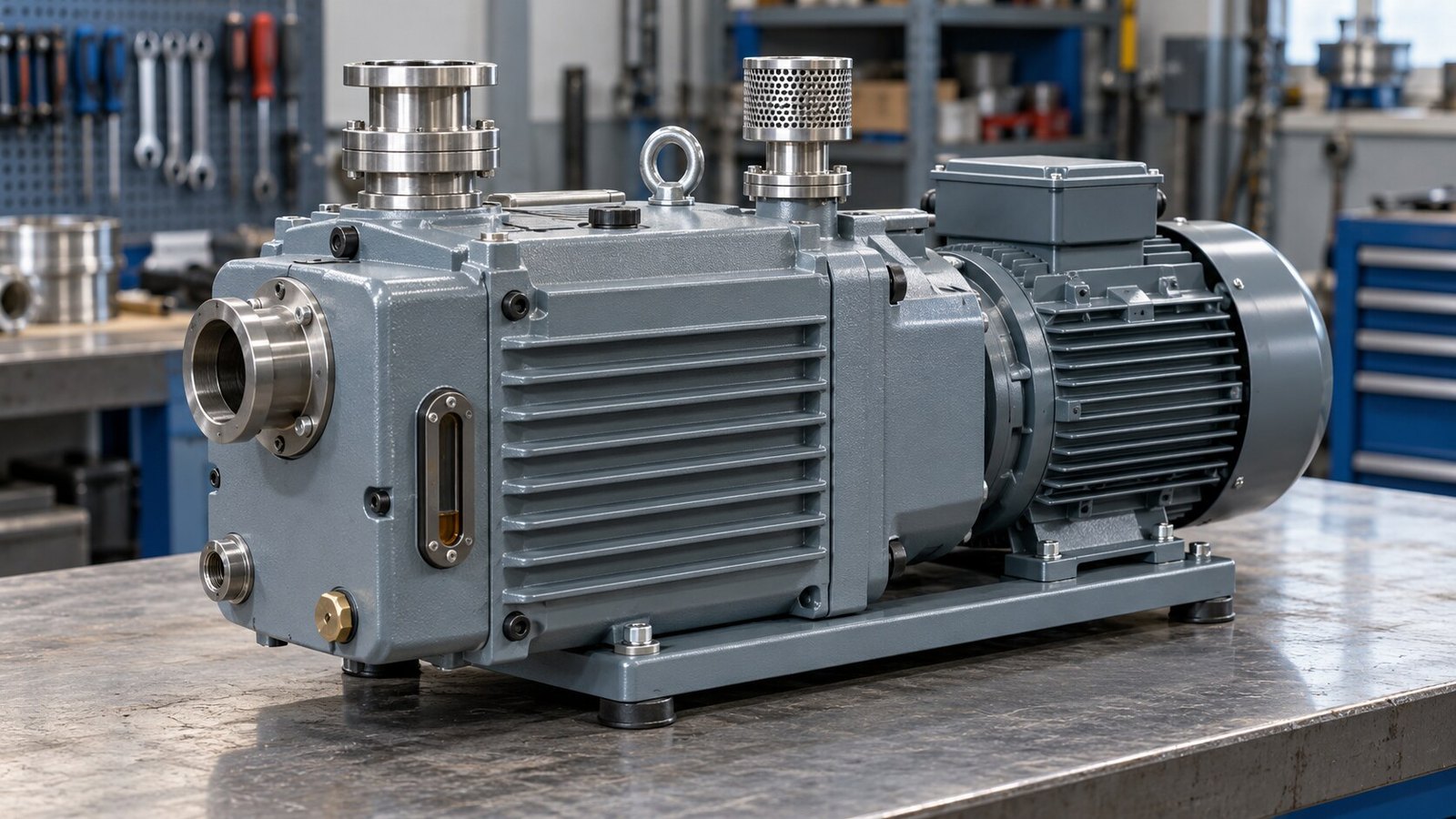
A vacuum pump removes gas from a vessel or process to lower its pressure. The useful result is the pressure maintained where the work happens. A pump that evacuates an empty vessel quickly may still struggle when a process continuously releases gas or vapor.
How two common designs work
Oil-sealed rotary-vane pumps use an offset rotor with sliding vanes. Gas enters expanding spaces, becomes trapped, and is compressed as those spaces shrink toward the exhaust. Oil helps seal and lubricate the mechanism. Oil condition, vapor exposure, and exhaust treatment therefore belong in the operating plan. Dry-running vane designs also exist; their maintenance requirements differ.
Liquid-ring pumps use an offset impeller rotating inside a ring of operating liquid. Spaces between the blades and liquid expand to admit gas, then contract to compress and discharge it. The liquid provides the seal and carries away heat. This design can suit moist gases and condensable vapors, provided the operating liquid and construction materials are compatible with the process.
The liquid's vapor pressure limits the vacuum a liquid-ring pump can achieve. Its temperature and the cooling arrangement matter, especially when liquid recirculates. A liquid-ring pump and an oil-sealed rotary-vane pump should therefore be compared at the required operating conditions, rather than treated as interchangeable equipment.
Choose for pressure, pumping speed, and process
Prepare a short duty description before comparing models:
• Pressure: State the required absolute pressure and units. Distinguish operating pressure from the pump's ultimate pressure under specified test conditions.
• Pumping speed: Specify vessel volume, starting pressure, target pressure, and allowed evacuation time. Also identify the gas or vapor load that continues during operation.
• Installed system: Include piping lengths and diameters, valves, filters, traps, and other restrictions. Effective pumping speed at the vessel can be lower than the pump's rated inlet speed.
• Process compatibility: Identify gas composition, moisture, particles, temperature, contamination limits, and exhaust-handling requirements. Confirm suitability with the equipment manufacturer.
Use the manufacturer's performance curve at the intended pressure. A maximum pumping-speed figure alone does not describe the full operating range. For a liquid-ring system, include operating-liquid supply, separation, cooling, and disposal in the comparison.
Recognize a change before replacing the pump
Record normal evacuation time, process pressure, temperatures, and operating conditions. When performance changes, compare the same duty and gauge location before deciding that the pump itself has failed.
Slow evacuation or a higher final pressure can justify checking for system leaks, inlet restrictions, or a changed process load. Overheating, abnormal noise, oil mist, or changing fluid condition also deserve investigation. These are clues, not a diagnosis: for example, Leybold identifies a restricted exhaust as a possible cause of slow pumping and overheating in its TRIVAC guidance.
Follow the site's shutdown and isolation procedures before inspection. Use qualified personnel for electrical work or internal repairs.
Maintain the exact model, not just the pump type
Use the current manual for the manufacturer, model, and process duty. Follow its fluid specification, level-check procedure, filter requirements, service intervals, and startup and shutdown instructions. Avoid applying one model's oil-change interval to every vacuum pump.
For example, Leybold's LB 16 oil-and-filter guide explicitly accompanies that pump's instruction manual. Its TRIVAC guidance addresses cooling airflow, exhaust restrictions, filtration, and gas ballast. Gas-ballast settings must follow the applicable manual and process requirements. Liquid-ring equipment instead needs attention to its specified operating-liquid conditions and cooling circuit; rotary-vane oil instructions are not a substitute.
Bring useful information to the conversation
Have the nameplate, process description, pressure readings, evacuation times, and maintenance history available. Contact RMS Pump at (503) 665-8101 to discuss your equipment and confirm the appropriate next step for your application.
Technical references
When To Call RMS Pump
Call RMS Pump when a pump issue causes pressure loss, repeated starts, leaks, unusual noise, vibration, overheating, control trips, sewage backups, fire pump readiness concerns, or system downtime. RMS Pump services commercial, municipal, apartment, fire suppression, sewage, domestic water, and booster pump systems across Oregon and Washington.