Pump Control Panel Troubleshooting For Commercial Systems

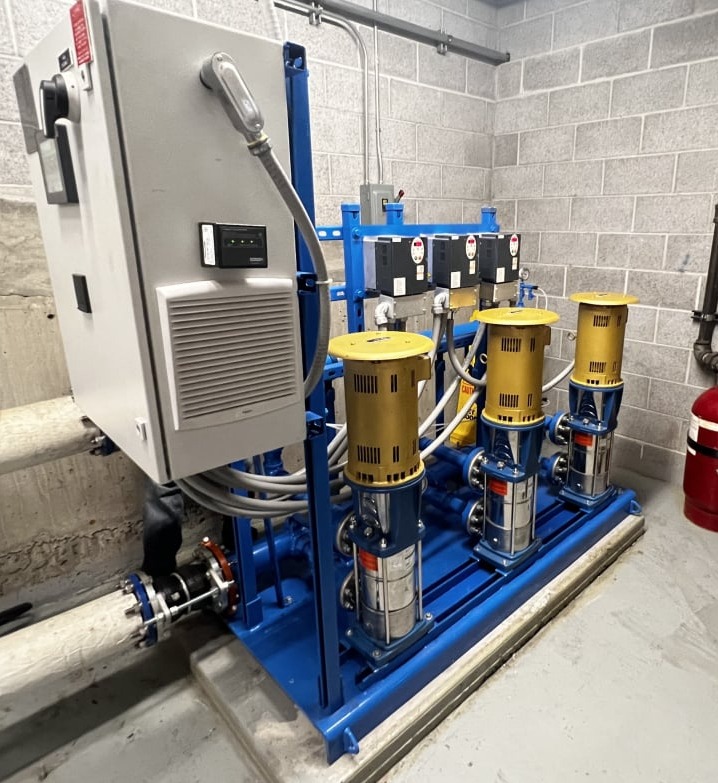
Many pump failures are not caused by the pump alone. The control panel decides when the pump starts, when it stops, how it alternates with other pumps, and when an alarm should alert the building team. If the controls are not working correctly, a good pump can still leave a property without pressure, drainage, circulation, or fire protection readiness.
Control problems should be handled methodically. Resetting a fault without finding the reason may get the system running for a short time, but it can also hide a condition that is about to repeat.
Common Control Panel Symptoms
• Pump does not start when demand is present.
• Pump starts and stops too often.
• Lead and lag pumps do not alternate.
• Overload, phase loss, or VFD faults keep returning.
• High-level, low-pressure, or low-water alarms do not report correctly.
• Contactors chatter, buzz, or show heat damage.
• Float switches, pressure switches, or transducers give inconsistent readings.
The symptom points the technician toward the first checks, but it does not always identify the root cause. A tripped overload may come from a failing motor, a jammed pump, low voltage, incorrect overload settings, poor connections, or a pump operating outside its normal range.
Start With The Sequence
Every control panel has a sequence of operation. A booster system may use pressure transducers and VFDs. A lift station may use floats or level sensors. A sump system may use simple on and off levels. A fire pump controller must follow stricter testing and code requirements.
Before changing parts, confirm what should happen at each step. Check the incoming signal, the controller response, the starter or drive output, and the pump response. This avoids replacing a starter when the real issue is a level device, a failed relay, or a loose terminal.
Electrical Checks Matter
Voltage, amperage, phase balance, grounding, overload settings, and motor insulation readings all help separate a control issue from a motor or pump issue. Heat marks, loose wiring, corroded terminals, and water intrusion are also important warning signs.
For VFD systems, stored fault history can be useful. Overcurrent, underload, overvoltage, communication, and sensor faults each point in different directions. Clearing the fault history before recording it can erase evidence needed for troubleshooting.
Controls And Mechanical Conditions Are Connected
A control panel may show the failure, while the cause is mechanical. A clogged pump can trip overloads. A bad check valve can create short cycling. A waterlogged pressure tank can make a booster system start constantly. A float problem can make a lift station run too long or not run at all.
Good troubleshooting checks both sides of the system. The controls, pump, valves, piping, and operating conditions all need to agree.
When To Schedule Service
Schedule service when faults repeat, alarms are not reliable, pumps short cycle, or a panel shows heat, corrosion, noise, or nuisance trips. Control issues are often cheaper to fix before they cause a motor failure, overflow, pressure loss, or emergency call.
RMS Pump services pump controls, starters, VFDs, alarms, and related pumping equipment for commercial, apartment, municipal, fire suppression, sewage, and domestic water systems across Oregon and Washington.
When To Call RMS Pump
Call RMS Pump when a pump issue causes pressure loss, repeated starts, leaks, unusual noise, vibration, overheating, control trips, sewage backups, fire pump readiness concerns, or system downtime. RMS Pump services commercial, municipal, apartment, fire suppression, sewage, domestic water, and booster pump systems across Oregon and Washington.