Pump Cavitation Warning Signs

Cavitation is one of the fastest ways to turn a pump problem into a repair bill. It starts when pressure conditions allow vapor bubbles to form inside the pump. When those bubbles collapse, they can pit metal, damage impellers, increase vibration, and shorten seal and bearing life.
In the field, cavitation is often described as a pump sounding like it has gravel or marbles inside the casing. That sound should not be ignored.
What Causes Cavitation
Most cavitation problems are related to suction conditions, flow conditions, or the way the pump is being operated. The pump may be asked to run outside its intended range, or the suction side may not be delivering liquid cleanly to the impeller.
Common causes include clogged strainers, restricted suction piping, partially closed valves, undersized suction lines, high liquid temperature, excessive lift, air leaks, poor inlet piping, or a pump running too far from its best efficiency point.
Warning Signs
• A rattling or gravel-like sound from the pump casing.
• New or increasing vibration.
• Unstable discharge pressure.
• Loss of flow even though the pump is running.
• Mechanical seal failures that repeat.
• Bearing noise or elevated bearing temperature.
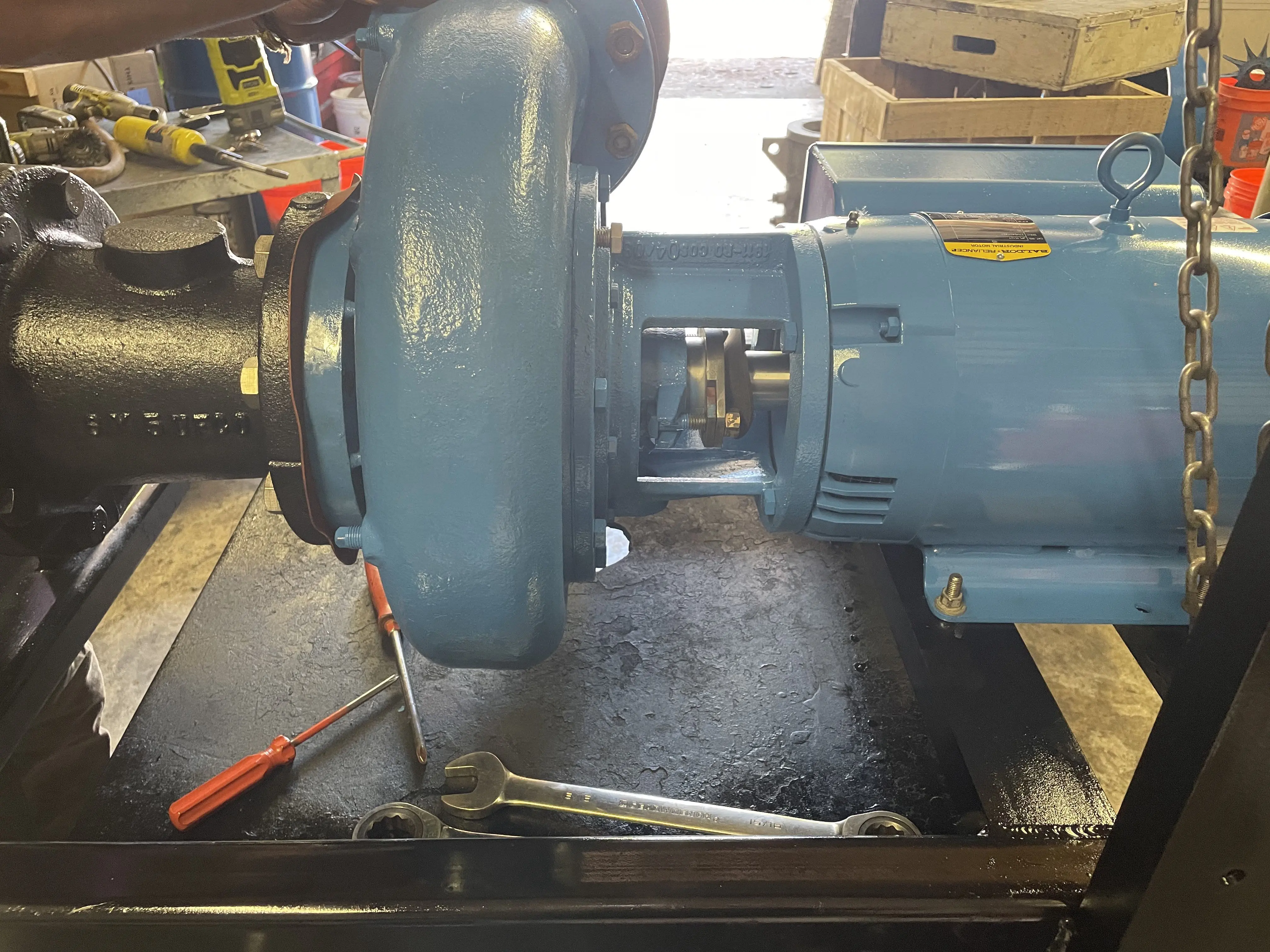
• Pitted, rough, or eaten-away impeller surfaces.
One warning sign by itself may not prove cavitation, but repeated noise, vibration, and performance loss should be investigated quickly.
Why It Gets Expensive
Cavitation damage is not limited to the impeller. Vibration and unstable hydraulic loading can affect seals, bearings, couplings, bases, and piping. If the root cause is not corrected, replacing the damaged part only resets the clock on the next failure.
That is why a cavitation repair should include system checks. Suction pressure, discharge pressure, flow, valve position, pipe condition, and control settings all matter.
Prevention
Preventing cavitation starts with giving the pump a stable inlet and operating it within its intended range. Keep strainers clean, verify valves are fully open where they should be, maintain proper tank levels, and correct air leaks on the suction side.
For variable speed systems, confirm the control sequence is not forcing the pump into an unstable operating zone. A VFD can improve efficiency, but it cannot overcome a bad suction condition or incorrect pump selection.
When To Schedule Service
Schedule service when cavitation noise appears, pressure becomes unstable, or seals and bearings start failing repeatedly. Early inspection can prevent the damage from spreading through the pump and connected equipment.
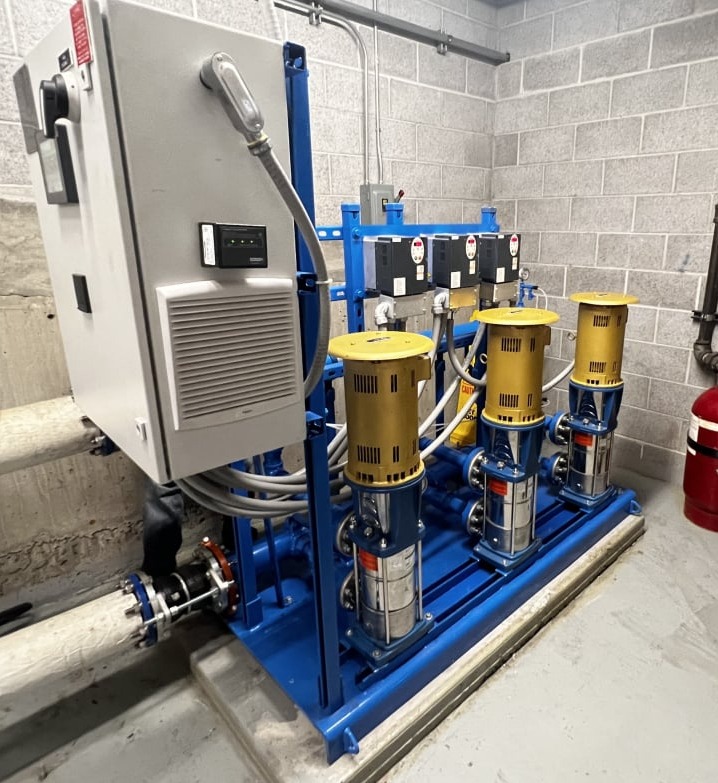
RMS Pump troubleshoots cavitation, vibration, pressure loss, and repeat pump failures for commercial, municipal, fire suppression, sewage, and domestic water systems across Oregon and Washington.
When To Call RMS Pump
Call RMS Pump when a pump issue causes pressure loss, repeated starts, leaks, unusual noise, vibration, overheating, control trips, sewage backups, fire pump readiness concerns, or system downtime. RMS Pump services commercial, municipal, apartment, fire suppression, sewage, domestic water, and booster pump systems across Oregon and Washington.