

Lead Lag Pump Sequencing Problems In Duplex Systems

Open pump control unit with wiring, contactors, and terminal blocks
Image: Photo by PumpExpert, CC BY-SA 4.0, via Wikimedia Commons

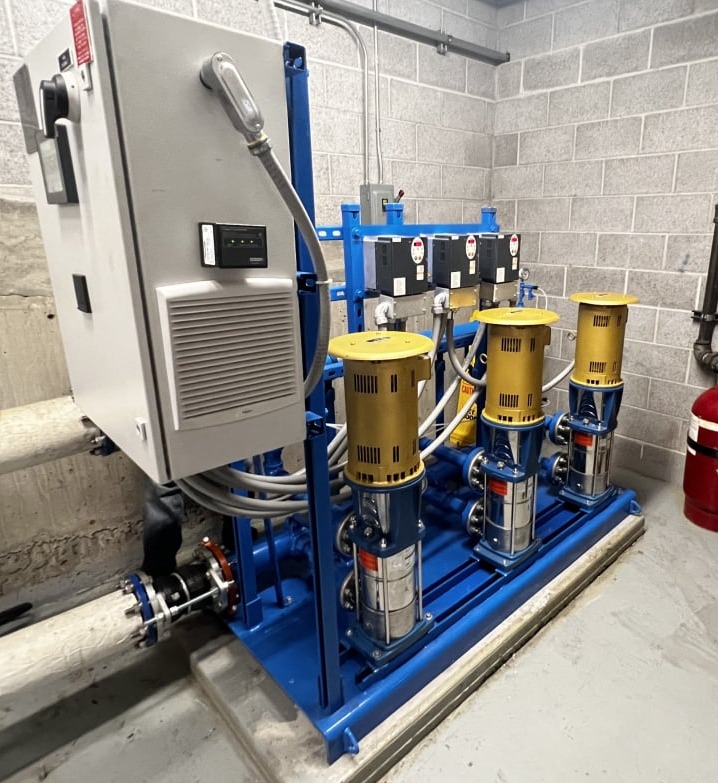
Duplex pump systems are designed so two pumps share the work. One pump starts first as the lead pump. The second pump starts as the lag pump when demand rises, level climbs, or pressure cannot be maintained by the lead pump alone. In many systems, the controls alternate which pump leads so run time stays balanced.

When lead-lag sequencing fails, the system may still appear to operate, but reliability is reduced. One pump may carry most of the load, the backup pump may not start when needed, or both pumps may run when only one should.

Signs Of Sequencing Trouble

• One pump has far more run time than the other.

• The lag pump never starts during high demand.

• Both pumps start together when one should be enough.

• Pumps do not alternate after each cycle.

• The same overload or VFD fault returns on one pump.

• High-level or low-pressure alarms occur even though both pumps are available.

• The system recovers only after a manual reset.

Run-time imbalance is one of the easiest clues to miss. If the system has elapsed-time meters or controller history, review them. A large difference between pumps can show alternation problems, mechanical problems, check valve issues, or a pump that is not producing the expected flow.

Common Causes

Lead-lag issues can come from floats, transducers, pressure switches, relays, PLC logic, VFD settings, failed starters, bad contacts, control wiring, or incorrect hand-off-auto switch positions. Mechanical conditions can also affect the sequence. A weak pump may force the lag pump to start too often, while a leaking check valve can make both pumps cycle more than expected.

For lift stations, level devices and high-level alarms must be checked carefully. For booster systems, pressure sensors, tank condition, VFD sleep settings, and staging pressure all matter.

Why Alternation Matters

Alternation helps balance wear. If one pump always starts first, it may wear faster while the second pump sits idle. An idle pump is not automatically a healthy pump. Seals can dry, bearings can deteriorate, and faults may go unnoticed until the backup is needed.

Balanced operation also provides better evidence for maintenance planning. If run times suddenly diverge, something changed.

Testing The Backup Pump

The lag pump should be tested under realistic conditions. A simple manual bump test proves that the motor turns, but it does not prove that the pump will start automatically, make flow, hold pressure, or respond to a real alarm condition.

Testing should confirm the automatic sequence, control signals, pump rotation, amperage, discharge pressure, check valves, alarms, and recovery behavior. For critical systems, document the test results.

When To Schedule Service

Schedule service when run times are unbalanced, the lag pump does not start automatically, alarms repeat, or the system depends on manual resets. Lead-lag problems should be corrected before the site loses backup capacity.

RMS Pump services duplex pump controls, lift stations, booster systems, VFDs, starters, alarms, and related commercial pump equipment across Oregon and Washington.

When To Call RMS Pump

Call RMS Pump when a pump issue causes pressure loss, repeated starts, leaks, unusual noise, vibration, overheating, control trips, sewage backups, fire pump readiness concerns, or system downtime. RMS Pump services commercial, municipal, apartment, fire suppression, sewage, domestic water, and booster pump systems across Oregon and Washington.

Contact Us
Licensed, Bonded & Insured
  • UBI: 602 651 292
  • CCB#: 173135
  • L.P.I Electrical: #153CPI
  • © Copyright RMS Pump Inc. - All Rights Reserved