
Commercial Pump Vibration: Alignment, Bearings, And Base Issues

Vibration is one of the clearest signs that a pump system needs attention. A little vibration is normal in rotating equipment, but a change in sound, movement, bearing temperature, or seal life can mean the pump and motor are no longer operating as a stable assembly.
Ignoring vibration usually makes the repair larger. What starts as misalignment or a worn bearing can spread into seal failures, coupling wear, motor damage, cracked piping, loose bases, and repeated shutdowns.
What Vibration Can Point To
• Pump and motor misalignment.
• Worn bearings or poor lubrication.
• Coupling wear or incorrect coupling spacing.
• Impeller imbalance or debris in the impeller.
• Cavitation or poor suction conditions.
• Pipe strain pulling the pump out of position.
• Loose base bolts, grout problems, or soft foot.
• Pump operating too far from its intended flow range.
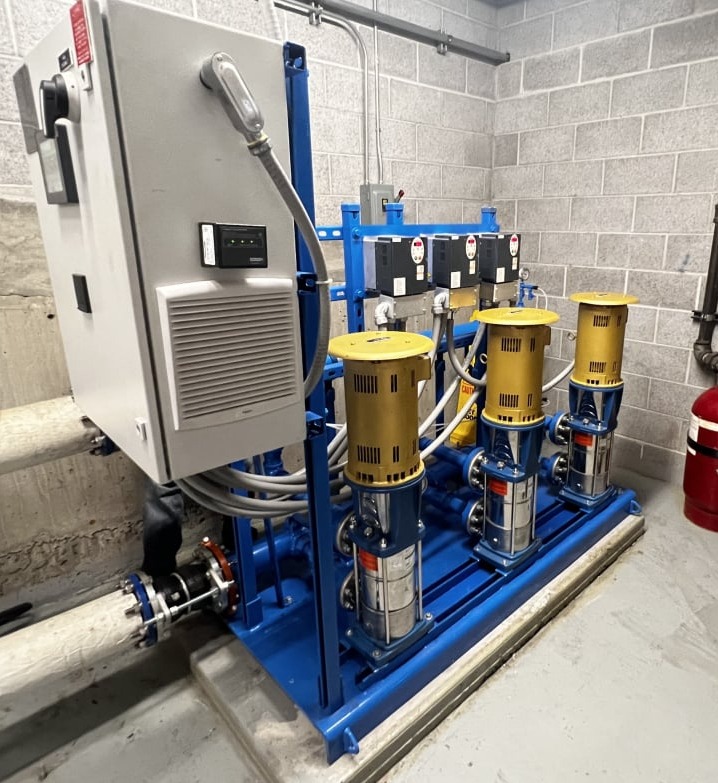
The same symptom can have more than one cause. For example, a vibrating booster pump may have alignment problems, but it may also be reacting to a bad check valve, unstable pressure control, or a suction restriction.
Alignment Is More Than Moving The Motor
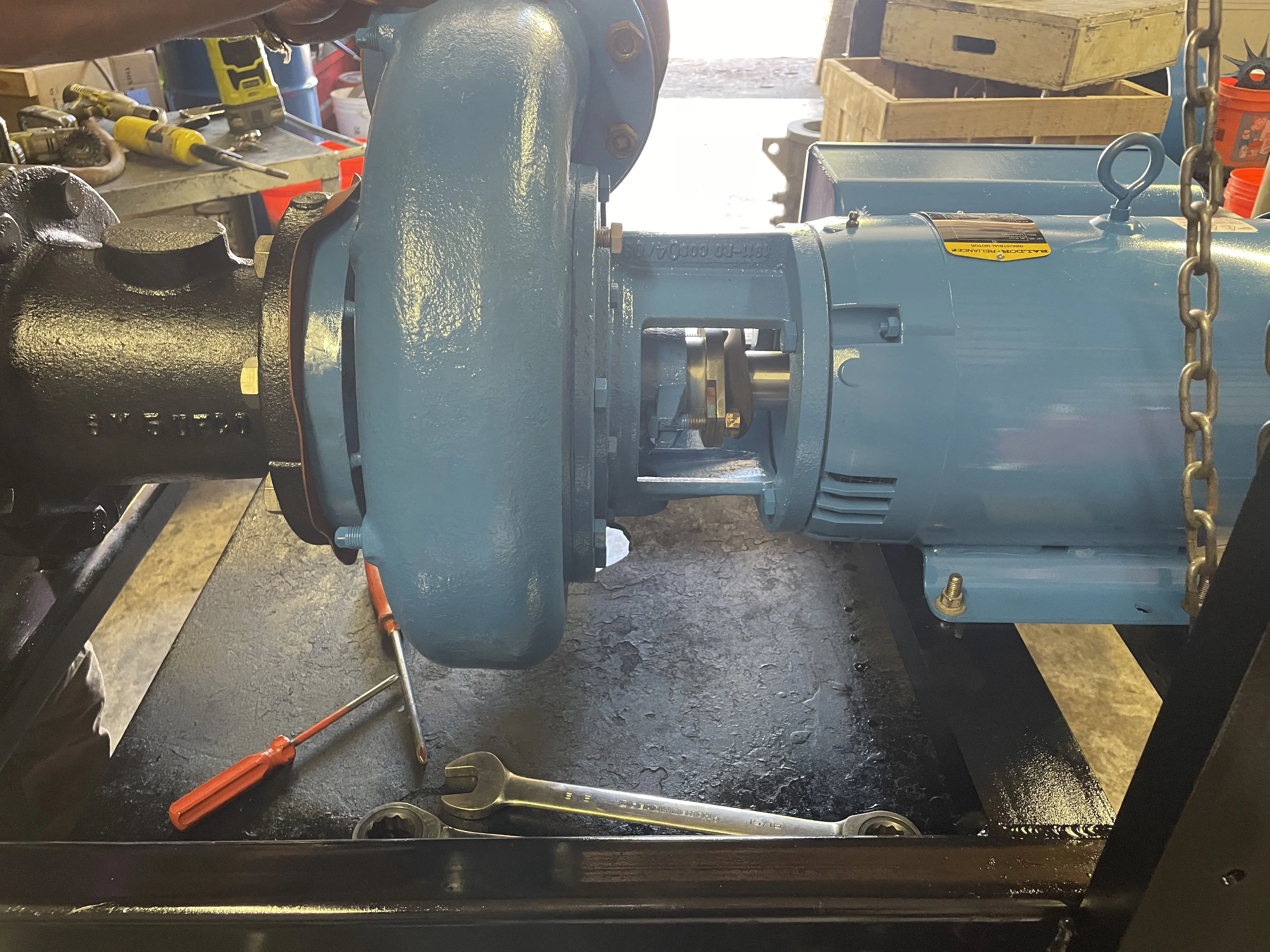
Pump alignment should be checked under practical conditions. The base, mounting surfaces, coupling, motor feet, and pipe connections all affect the result. If pipe strain is pulling the pump casing, the pump may appear aligned until the piping is connected.
Correct alignment reduces bearing loads and seal movement. It also helps the pump run quieter and more efficiently. On critical systems, alignment should be checked after repairs, motor replacement, coupling replacement, or base work.
Bearings And Seals Often Show The Damage First
Bearings and mechanical seals are common failure points because they carry the results of vibration, heat, contamination, and hydraulic instability. Replacing a failed bearing or seal without correcting the underlying condition may only create a short-term fix.
Patterns matter. If a seal fails repeatedly, if bearing noise returns quickly, or if a pump runs hot after repair, the system should be inspected beyond the failed part.
Base And Piping Conditions
A pump mounted to a weak base or strained piping will be hard to keep aligned. Loose anchors, cracked grout, corroded bases, flexible supports, and piping that does not line up naturally can all move the pump away from its intended geometry.
The connected piping should support itself. The pump should not be used as the anchor point that forces the piping into position.
When To Take Action
Schedule vibration service when a pump gets louder, begins moving more than usual, fails seals repeatedly, trips overloads, or shows rising bearing temperature. Early alignment and bearing checks can prevent damage to the pump, motor, and connected equipment.
RMS Pump inspects, repairs, aligns, and services commercial pumps for domestic water, hydronic, sewage, municipal, fire suppression, and industrial systems across Oregon and Washington.
When To Call RMS Pump
Call RMS Pump when a pump issue causes pressure loss, repeated starts, leaks, unusual noise, vibration, overheating, control trips, sewage backups, fire pump readiness concerns, or system downtime. RMS Pump services commercial, municipal, apartment, fire suppression, sewage, domestic water, and booster pump systems across Oregon and Washington.