Check Valve Failure Signs In Pump Systems

Check valves are simple components with a critical job. They allow flow in the intended direction and stop reverse flow when a pump shuts down. When a check valve fails, the pump may still run, but the system can lose pressure, cycle too often, hammer the piping, or send water back where it should not go.
Because check valves sit in the piping rather than inside the pump, they are sometimes missed during troubleshooting. That can lead to repeat pump repairs when the real problem is a valve that is stuck, worn, leaking back, or closing too aggressively.
What Failed Check Valves Can Cause
• Pressure drops immediately after the pump shuts off.
• Booster pumps short cycle during low demand.
• Lift station pumps refill the wet well through the discharge line.
• Loud bang or vibration after shutdown.
• Uneven lead-lag pump run times.
• Pump spins backward after stopping.
• Loss of prime on systems that depend on held water.
• Repeated seal, bearing, or coupling issues caused by hydraulic shock.
A failed check valve can look like several different problems. In a booster system, it may look like a pressure tank issue. In a lift station, it may look like poor pump capacity. In a hydronic or condenser water system, it may show up as unexpected flow through an idle pump.
Leaking Back Versus Slamming Shut
Not all check valve failures are the same. A valve can fail to seal, allowing flow to move backward after shutdown. It can also slam shut too late or too violently, creating water hammer. The repair approach depends on which failure mode is happening.
Leaking back usually shows as pressure decay or repeated starts. Slamming shut usually shows as noise, vibration, or pipe movement. Some systems have both problems because the valve is worn, oversized, incorrectly selected, or installed in a poor piping arrangement.
Why Water Hammer Matters
Water hammer is a pressure surge caused by a sudden change in flow. A check valve that closes too abruptly can send shock through valves, piping, pump bases, gauges, supports, and connected equipment. The noise may happen only for a moment, but the repeated stress can loosen joints and damage components over time.
The solution may involve valve replacement, valve type selection, piping changes, control timing, soft start settings, or VFD ramp adjustments. Simply installing the same valve again may not solve the root cause.
Field Checks
A technician may compare suction and discharge pressure, watch pressure after shutdown, listen for reverse rotation, inspect valve position, check pump run times, and verify whether water is moving through an idle line. On lift stations, valve checks may be paired with wet well level observation and pump-down testing.
Where isolation valves allow it, the check valve can often be evaluated without removing major piping. If the valve is corroded, stuck, or suspected of internal damage, disassembly or replacement may be needed.
When To Schedule Service
Schedule service when pressure drops quickly after shutdown, pumps start too often, piping bangs, a pump appears to lose prime, or a lift station pump cannot keep up even though it runs. Check valves are small compared with the equipment they protect, but their failure can drive much larger repairs.
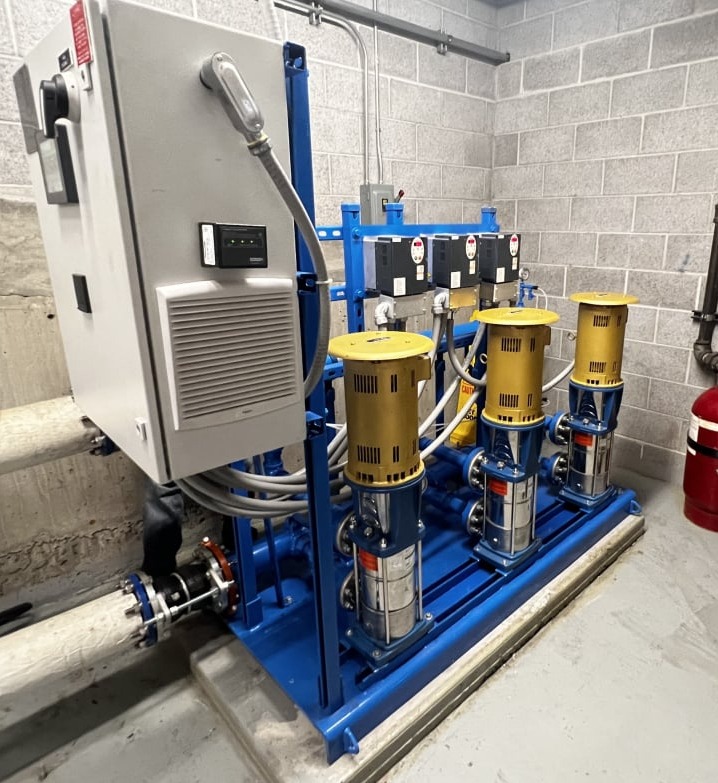
RMS Pump services check valves, booster systems, lift stations, hydronic pumps, condenser water pumps, and related commercial pump systems throughout Oregon and Washington.
When To Call RMS Pump
Call RMS Pump when a pump issue causes pressure loss, repeated starts, leaks, unusual noise, vibration, overheating, control trips, sewage backups, fire pump readiness concerns, or system downtime. RMS Pump services commercial, municipal, apartment, fire suppression, sewage, domestic water, and booster pump systems across Oregon and Washington.