
Booster Pump Pressure Problems in Commercial Buildings

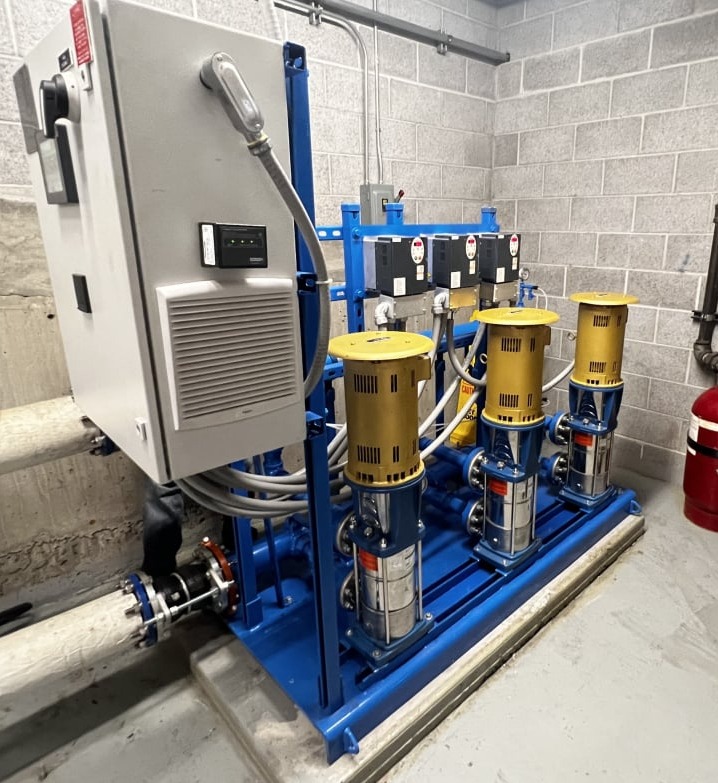
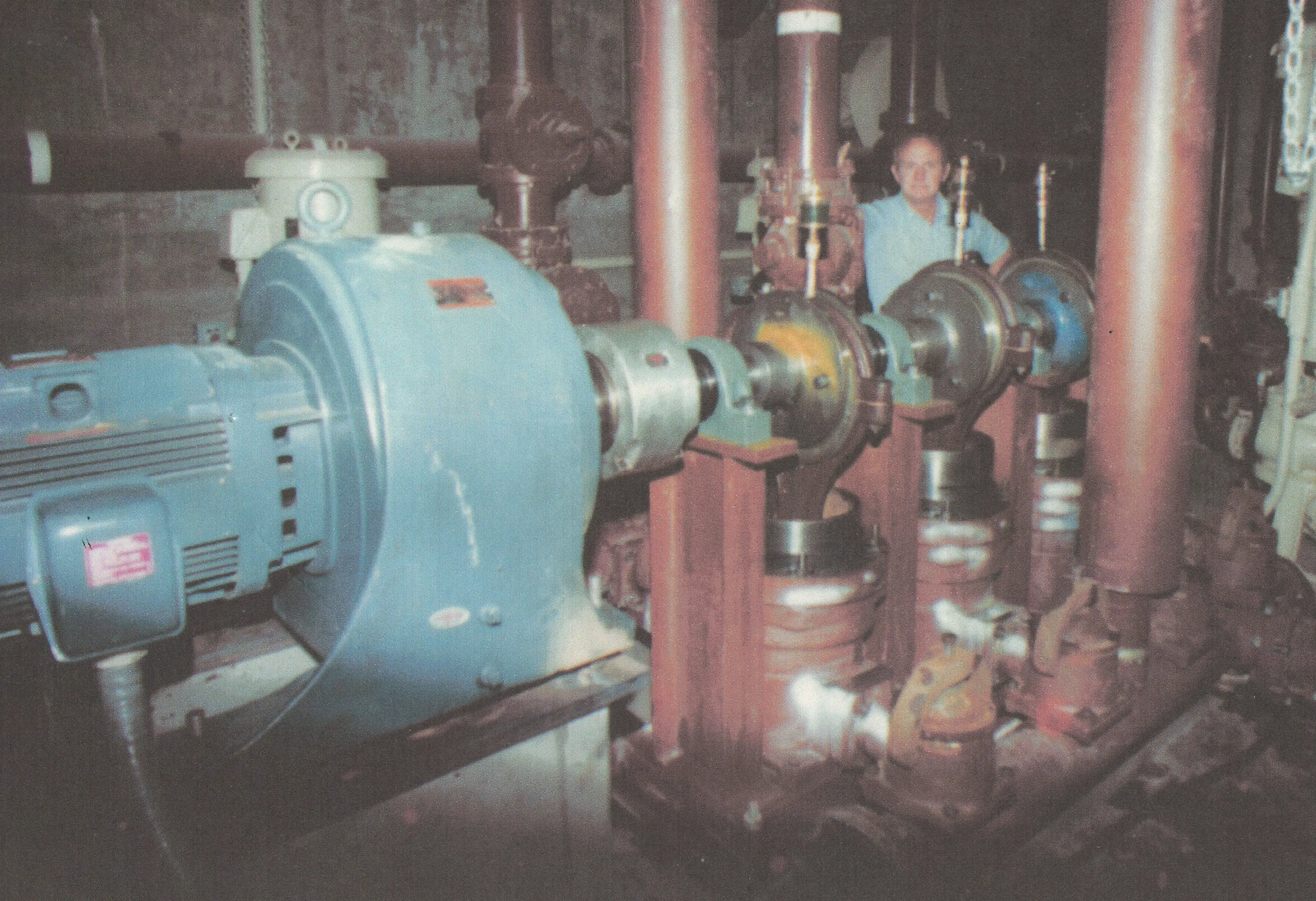
Blue centrifugal pumps and pressure gauges in a mechanical room
Image: Photo by Saud, CC BY-SA 4.0, via Wikimedia Commons

Domestic water booster systems are supposed to make pressure feel uneventful. When the system is healthy, tenants and building staff do not think about it. When pressure falls off, cycles up and down, or changes floor by floor, the pump room usually tells the story before the rest of the building does.

For apartment complexes, offices, hotels, schools, and municipal buildings, low or unstable pressure can point to a pump issue, a control issue, a tank issue, or a piping restriction. The right fix depends on confirming which part of the system is actually causing the pressure loss.

Common Symptoms

• Upper floors lose pressure during morning or evening peak demand.

• Pressure rises and falls rapidly even when demand is steady.

• Pumps short cycle or start more often than normal.

• A lead pump runs continuously while lag pumps do not stage correctly.

• Pressure is acceptable at the pump discharge but poor at remote fixtures.

• Tenants report air, noise, or hammering after pump starts.

Those symptoms matter because they separate control problems from hydraulic problems. A pressure transducer or control panel can make a good pump behave badly. A clogged strainer or partially closed valve can make a good control sequence look like it is failing.

Where To Start

The first checks should be basic and repeatable. Confirm suction pressure, discharge pressure, tank precharge, valve position, and pump rotation. Compare actual pressure to the setpoint and confirm whether the controller is receiving a clean signal from the pressure sensor.

If a system has multiple pumps, verify that each pump can run independently. A lead pump can hide a failed lag pump until demand rises. A lag pump can also mask a weak lead pump until the system runs at lower demand and starts short cycling.

Control Problems

Variable frequency drives and pressure controllers help booster systems match changing demand, but they also add failure points. A drifting pressure transducer, loose control wiring, incorrect setpoint, or failed drive can produce unstable pressure without a mechanical pump failure.

Control issues often show up as pressure hunting. The pump speeds up, overshoots, slows down, undershoots, and repeats the pattern. That can increase wear on mechanical seals, couplings, check valves, and motors.

Mechanical And Hydraulic Problems

Mechanical issues can look similar from the fixture side of the building. Worn impellers, failed seals, plugged strainers, blocked suction lines, damaged check valves, and closed or throttled valves can all reduce delivered pressure.

On older systems, pump performance should be compared to the expected curve. If the pump cannot produce the head it used to produce, the issue may be wear, internal recirculation, air entrainment, or a suction restriction.

Tank And Check Valve Issues

Pressure tanks reduce cycling and smooth small demand changes. If the tank precharge is wrong or the bladder has failed, the booster system may cycle constantly. That cycling can shorten motor, starter, seal, and bearing life.

Check valves are just as important. A leaking check valve can let pressure bleed backward through an idle pump. The system may restart repeatedly even when the building is not using much water.

When To Call For Service

Call for service when pressure complaints repeat, pumps run hotter than normal, the system cycles rapidly, or controls show recurring faults. Waiting until the system is fully down usually means a more disruptive repair.

RMS Pump services domestic water booster systems across Oregon and Washington. We can inspect pressure controls, pumps, tanks, valves, and piping so the repair is based on measured conditions instead of guesswork.

When To Call RMS Pump

Call RMS Pump when a pump issue causes pressure loss, repeated starts, leaks, unusual noise, vibration, overheating, control trips, sewage backups, fire pump readiness concerns, or system downtime. RMS Pump services commercial, municipal, apartment, fire suppression, sewage, domestic water, and booster pump systems across Oregon and Washington.

Contact Us
Licensed, Bonded & Insured
  • UBI: 602 651 292
  • CCB#: 173135
  • L.P.I Electrical: #153CPI
  • © Copyright RMS Pump Inc. - All Rights Reserved